In West of the Trail, One Price-Per-Square-Foot Number Is Hiding Two Markets
September 17, 2026
September 17, 2026
Why do two homes on the same block in West of the Trail sell for wildly different prices per square foot, even when they're the same size, same lot depth, same distance to the bay?
The answer is not condition, and it is not staging. It is that the number itself is measuring two unrelated things and averaging them together as if they were one.
As of May 2026, the median sale price for homes in West of the Trail stood at $735,000, up 17.6 percent from the same period a year earlier. The median price per square foot moved with it, up 13 percent year over year to $485.38. That kind of swing in a mature, built-out neighborhood is unusual. Established markets with steady inventory tend to see price-per-square-foot figures creep, not lurch.
The lurch is the tell. It means the mix of what sold changed more than the value of any individual property did. Some months, more of what closes are older homes selling essentially for their dirt. Other months, more of what closes are architecturally significant structures where the building itself carries the price. Blend those two categories into one median and you get a number that looks like it's describing appreciation when it's actually describing which type of sale happened to close that quarter.
Once you see this, a lot of the confusion around comparing West of the Trail to other Sarasota neighborhoods starts to resolve.
West of the Trail is not a single housing product. It's a corridor of roughly 15 named neighborhoods sitting between US-41 and Sarasota Bay, most of them built out between the 1920s and 1970s, and within that footprint two very different economic logics are operating at the same time.
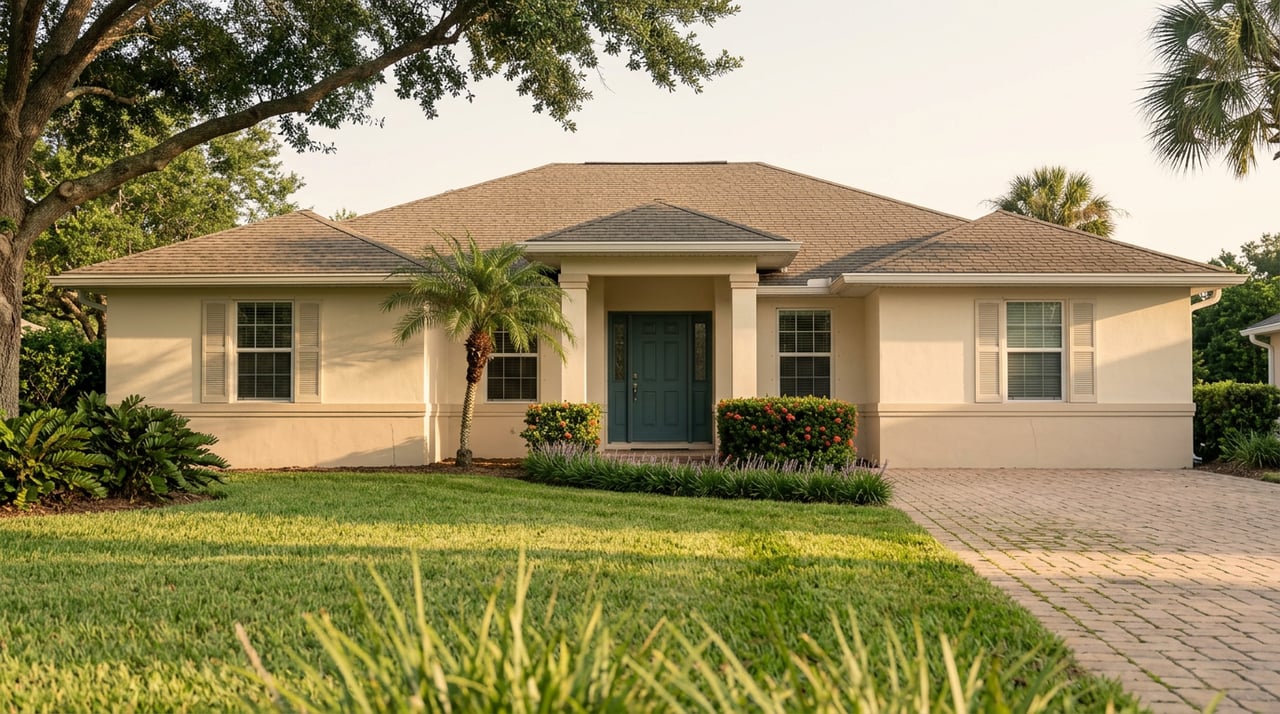
The first is straightforward land value. Interior lots in an established neighborhood close to downtown and the water command a price regardless of what's sitting on them. A dated ranch home on a good lot can list, sell, and get demolished within a year, because the buyer never intended to live in the existing structure. In this segment, price per square foot of the existing home is close to meaningless. The transaction is really a land purchase with a free demolition included. Reporting on the corridor has put raw land value on some of these interior lots north of $700,000 before a shovel ever hits dirt.
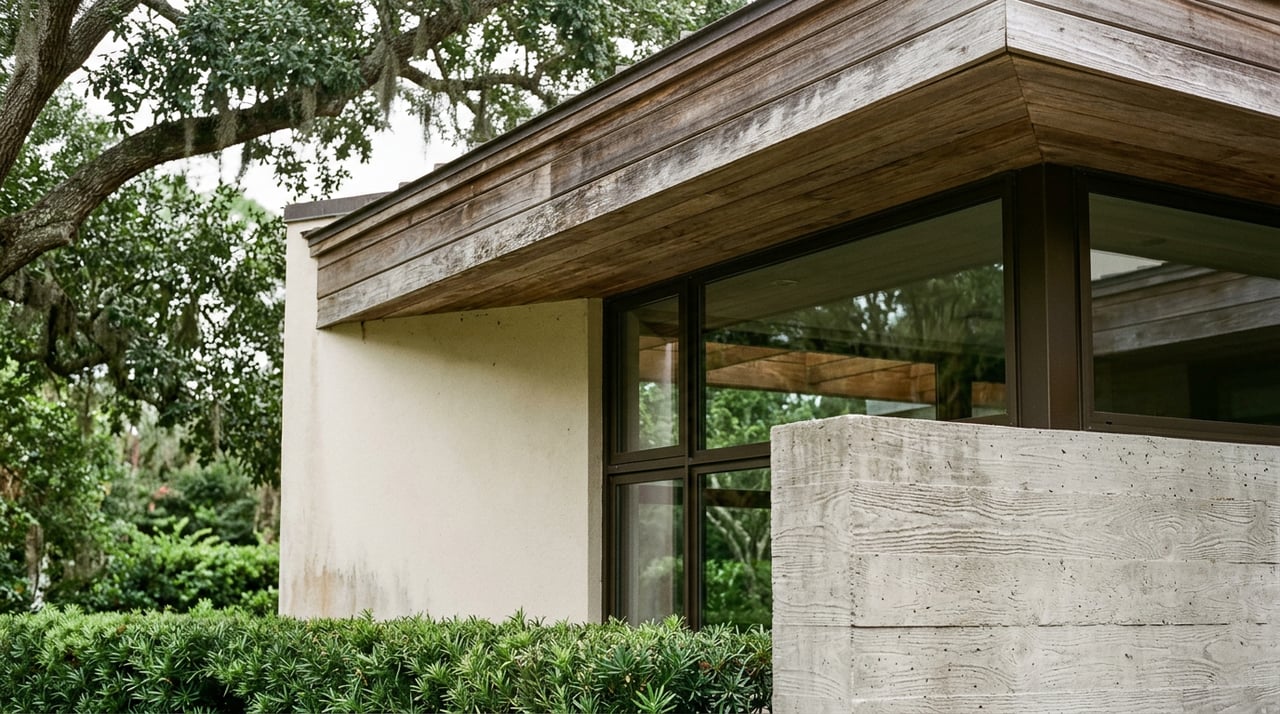
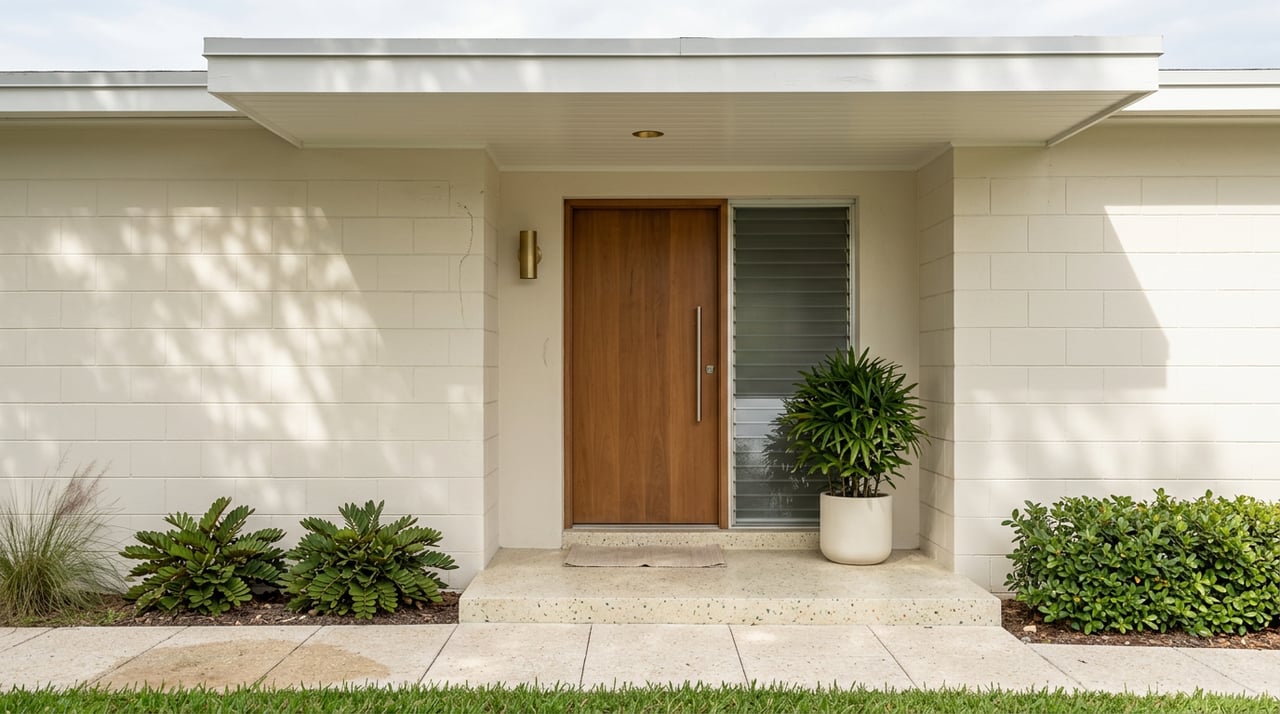
The second logic is structural. A subset of homes in the corridor, particularly in Sapphire Shores and the Lido Shores enclave nearby, carry genuine architectural pedigree from the Sarasota School of Architecture, the postwar modernist movement associated with Paul Rudolph, Ralph Twitchell, Tim Seibert, Jack West, and Victor Lundy. These homes were designed specifically for Florida's climate, with deep overhangs, ribbon windows, and an indoor-outdoor logic that still reads as contemporary seven decades later. Buyers seeking these homes aren't pricing the lot. They're pricing the structure, and in some cases paying a premium precisely because the building can't be replicated.
Put a land-value teardown and a Sarasota School specimen in the same monthly sales report and you get a price-per-square-foot figure that isn't wrong exactly. It's just not describing anything a buyer can actually use for comparison.
Here's roughly how that split shows up across a few of the corridor's named neighborhoods:
| Neighborhood | Homes | Typical range | What's driving price |
|---|---|---|---|
| Harbor Acres | 166 | ~$900,000 interior lots to $15 million+ bayfront | Two man-made peninsulas, nearly half the homes bayfront or canal, no CDD, price per square foot averages around $1,047 |
| McClellan Park | Established 1916, lots run 6,000 square feet to nearly an acre | Existing homes routinely marketed as "build new or renovate" | Land and location on one of Sarasota's oldest platted streetscapes, with no CDD and only a nominal voluntary association fee |
| Sapphire Shores / Lido Shores pocket | Smaller subset | Varies widely | Sarasota School architectural pedigree where present |
None of these three rows are measuring the same thing, which is exactly the point. Harbor Acres and McClellan Park listings both trade heavily on land and location, to the point that active McClellan Park listings this year have marketed a 1935 home on a half-acre parcel explicitly as a renovate-or-rebuild opportunity. The Sapphire Shores premium, where it exists, tracks the building instead. A 1948 McClellan Park house owned by Natalie Laughlin and Andrew Tanner since 2012 shows the other path in the same neighborhood: rather than scraping the lot, they brought in architectural designer Jimmy Thornton to add a 2024 addition that reoriented the home toward the pool, preserving the original structure's value instead of replacing it.
In most newer master-planned communities, a homeowners association and a design review committee would slow this kind of churn down. West of the Trail doesn't have that friction. Most of its neighborhoods predate the HOA era entirely, which means there's no architectural committee weighing in on whether a 1958 ranch gets restored or scraped. The decision sits entirely with the buyer and their contractor.
That absence of gatekeeping is part of the corridor's appeal for buyers who want design freedom. It's also the mechanical reason the teardown segment of the market stays as active as it does. Nothing structural is stopping a buyer from treating an existing home as a placeholder for its lot, so a meaningful share of every year's closings are exactly that.
A price-per-square-foot number only tells you something useful when every sale behind it was purchased for the same reason. In West of the Trail, they weren't.
If you're comparing a listing here to something in another Sarasota neighborhood, the price-per-square-foot figure on its own won't tell you which side of this split you're looking at. A few things will.
Year built and renovation history matter more than they do in a typical comparison. A home built in the 1950s or 60s that has never been substantially updated is a stronger teardown candidate than one that's been through a full renovation, regardless of what the two list for on paper.
Listing language is a signal worth reading closely. Descriptions built around lot size, waterfront frontage, and buildable potential are describing a land purchase. Descriptions built around original architectural details, named architects, or restoration quality are describing a structure purchase.
Lot dimensions and orientation carry more weight here than square footage of the house. In a corridor where the dirt itself is often the product, a wide or deep lot with good water proximity changes the math more than an extra bedroom would.
Whether the home shows up in any historical or architectural registry is worth checking directly. A structure with documented Sarasota School provenance is priced on an entirely different curve than a similarly sized, undistinguished home three blocks away.
Sarasota's broader market moved toward buyers through early 2026, with citywide days on market averaging 84 and sellers typically receiving around 92 percent of original list price. The luxury segment, where much of West of the Trail competes, saw steeper pullbacks, down 12 to 15 percent from 2022 peaks in some reporting.
That shift matters differently depending on which side of the split you're negotiating on. On a teardown-candidate lot, softer luxury pricing gives a buyer more room to negotiate against comparable land sales, since the existing structure was never going to anchor the price anyway. On an architecturally protected home, the negotiation is really about the building's condition and provenance, and a cooling luxury market has less bearing on a genuinely scarce structure than it does on a commodity lot.
Knowing which negotiation you're actually having, before you write an offer, is the difference between anchoring on the right comparables and anchoring on none at all.
How do I find out if a home has been through architectural review or holds any historical designation? County property records and any documentation the seller's agent provides are the starting point. If a home was designed by one of the recognized Sarasota School architects, that provenance is usually part of the listing history and worth confirming before you build a valuation around it.
Does the lack of an HOA in most of these neighborhoods affect resale value? It affects flexibility more than it affects value directly. Buyers get design freedom that planned communities don't offer, but that same freedom is what keeps the teardown segment of the market active, which is part of why the neighborhood's price-per-square-foot figure moves the way it does.
Is a teardown lot always the better deal? Not necessarily. A well-maintained, architecturally distinct home can outperform a same-priced teardown lot over time if the structure itself is part of what buyers are paying for. The right comparison depends on which product you're actually looking at, not on the square footage math alone.
If you're weighing a purchase in West of the Trail and want a read on which side of this split a specific listing falls on before you make an offer, A Classic Approach can walk through the comparables that actually apply to that property. Schedule a free market consultation to get a clear read before you anchor on a number that might not mean what it looks like it means.
Stay up to date on the latest real estate trends.
It's that appreciation for classically high standards that make me an ideal real estate professional to help you with your home sale or purchase in Sarasota and surrounding areas. I can help you with all your real estate needs, you get A Classic Approach with winning results. Call me today!