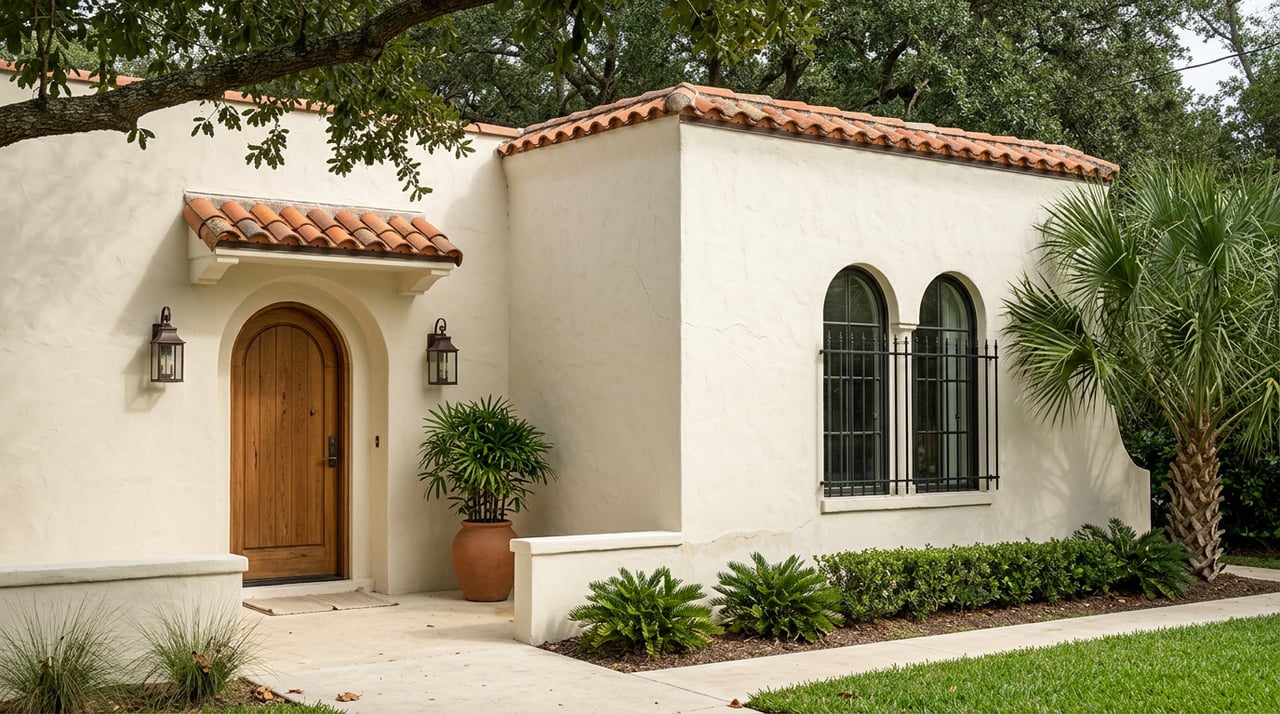
The One Document That Decides Your West Of The Trail Listing In 2026
August 6, 2026
August 6, 2026
Every West of the Trail seller I meet this year wants to talk about price first. That is the wrong first conversation. In a corridor where the same street can hold an AE-zone waterfront lot and an X-zone interior parcel one block inland, the number that actually controls your net proceeds is not on the MLS. It is on a one-page surveyor's form most owners have never looked at.
That form is the Elevation Certificate. In 2026 it has quietly become the highest-leverage piece of paper a West of the Trail seller controls, and the reason has less to do with flooding than with how insurance is now priced, how buyers are now shopping, and how the FAR/BAR AS IS contract now breaks when the numbers do not line up.
West of the Trail is not one market. It is roughly fifteen named residential pockets running from Hudson Bayou south toward Phillippi Estate Park, and the flood map cuts across them in ways that surprise longtime owners. The bayfront and canal-adjacent neighborhoods carry meaningful AE and V exposure on their waterfront streets, while the more inland historic pockets sit largely in higher-elevation X zones with a much lower flood risk profile.
Here is the rough lay of the land as sellers should think about it before pricing:
| West of the Trail pocket | Typical flood exposure on waterfront streets | Insurance implication for a buyer's quote |
|---|---|---|
| Harbor Acres, Oyster Bay Estates | AE, some V on point lots | Mandatory NFIP or private flood if financed |
| Indian Beach, Bay Point Park, Southpointe Shores | AE on canal and bay frontage | Elevation certificate materially changes premium |
| Cherokee Park, Granada, McClellan Park | Predominantly X | Flood not federally required, preferred-risk policies available |
Two houses within a five-minute walk can carry premiums that differ by several thousand dollars a year. That gap is what a buyer's lender sees, and it is what determines whether the offer you accepted on Monday survives the insurance binder on Wednesday of week two.
Under FEMA's Risk Rating 2.0 methodology, which launched in late 2021 and is now fully embedded in all 2026 NFIP policy renewals, premiums are priced to the individual property rather than to the zone as a whole. That change is the mechanism most sellers are missing. It means the old shorthand of "we're in AE, expect the AE number" is gone. Two AE homes on the same Oyster Bay canal now price very differently based on the lowest-floor elevation recorded on their Elevation Certificates.
A structure sitting two feet above Base Flood Elevation will pay substantially less than one at or below BFE. Order or update the EC before you list and the number the buyer's agent quotes back over the phone is the number you want quoted. Skip it and the buyer defaults to a worst-case estimate, then uses that estimate as leverage in the inspection period.
Sarasota County participates in FEMA's Community Rating System at Class 5, which translates to a 25 percent discount on NFIP premiums for properties in Special Flood Hazard Areas. That discount only applies if the policy is written correctly, and the policy is only written correctly if the EC is current.
Typical surveyor cost to prepare a new EC runs a few hundred dollars, generally in the $400 to $700 range. Against a luxury sale price above $1.5 million, that is the cheapest piece of listing prep on the invoice and often the one with the highest return.
Context matters here. As of early 2026 the Sarasota corridor has shifted toward buyer-favorable conditions, with citywide days on market averaging 84 days, inventory elevated after Hurricane Milton's late-2024 landfall drove a wave of seller-motivated listings, and sellers receiving roughly 92 percent of original list price. Mortgage rates sitting in the 6 to 6.8 percent range have cooled relocator demand, and properties above $1.5 million, which is where much of West of the Trail competes, have seen deeper declines of 12 to 15 percent from their 2022 peaks.
A buyer with 84 days of options is a buyer who will ask hard questions. Rising insurance costs are the number one variable eroding their purchasing power. When they see a listing with a stale or missing EC on a bayfront street, they price the uncertainty into their offer. When they see one with a recent EC, a written binder quote, and clean storm-damage disclosure, they compete on price.
Florida transactions overwhelmingly use the FAR/BAR AS IS contract, and the 15-day inspection window is where deals in flood-exposed neighborhoods die. Here is the order of operations that keeps yours alive:
That sequence turns three of the four common inspection-period renegotiation triggers into non-events before an offer is ever written.
The listings that hold their price in Harbor Acres and Oyster Bay this year are the ones whose sellers stop treating flood exposure as a defect to be minimized and start treating it as a variable to be documented. A favorable EC is a selling point worth advertising. A survey showing the home sits two feet above BFE, paired with a written quote from a named carrier, converts a buyer's abstract fear into a specific line item they can budget.
For an inland Cherokee Park or McClellan Park seller in an X zone, the same logic runs in reverse. Do not assume the buyer knows. Put the zone designation, the preferred-risk policy quote, and the CRS-adjusted number in the listing materials. The X-zone premium of a few hundred dollars a year, stated plainly, is often the number that closes the emotional gap for a buyer who has spent the morning touring bayfront homes with five-figure quotes.
Is an Elevation Certificate required to sell? No. It is not a mandated disclosure. It is the document that most efficiently controls the insurance number a buyer will see, which is why sellers who care about net proceeds order one anyway.
My home has never flooded. Does the EC still matter? Yes. Under Risk Rating 2.0 the premium is calculated from elevation and structural characteristics, not claims history alone. The EC is the input that lets the carrier price the home accurately rather than conservatively.
Should I fix a flood-related issue before listing or credit the buyer at closing? That depends on the specific issue, the buyer pool, and the appraisal. In a market where buyers have leverage, visible pre-list work usually earns more than a closing credit of the same dollar amount, because a credit does not repair the buyer's initial impression on the tour.
The elevation number is not the story of your home. It is the frame the buyer uses to read every other number on the listing sheet. Get the frame right and the rest of the negotiation gets easier.
If you are thinking about listing in Harbor Acres, Oyster Bay, Cherokee Park, McClellan Park, or anywhere else along the corridor and want a plain read on what your specific block looks like to a 2026 buyer, Michael Ballantyne will walk your property, pull the EC and zone data with you, and put a preparation plan on the table before you commit to a list price. Schedule a Free Market Consultation when you are ready.
Stay up to date on the latest real estate trends.
It's that appreciation for classically high standards that make me an ideal real estate professional to help you with your home sale or purchase in Sarasota and surrounding areas. I can help you with all your real estate needs, you get A Classic Approach with winning results. Call me today!